 WE MASTER DESIGN
Assembly / Checklist
Assembly tool access: a practical review checklist
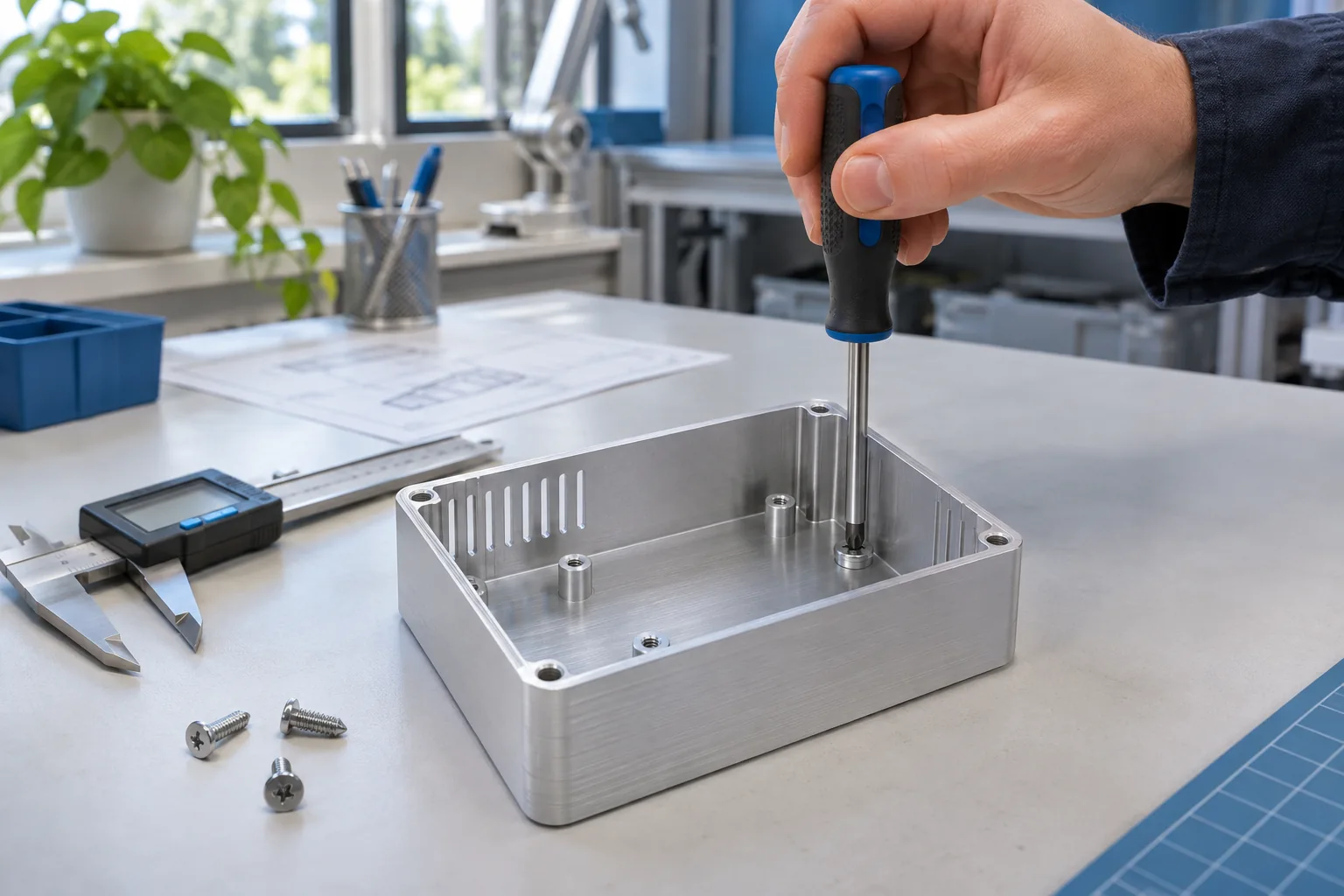
A fastener can fit in a CAD assembly while the tool needed to tighten it cannot. Check access with the intended assembly sequence and tool in mind, then confirm the arrangement with the manufacturer or assembly team.
Before you start
Gather the latest assembly model, fastener information and the intended assembly sequence. Record the tool type and any available tool dimensions. Mark unknown tool sizes or processes as assumptions; do not treat them as confirmed production requirements.
Checklist
- Find the approach. For each fastener, identify the direction the tool must approach and whether nearby walls, cables or other parts obstruct it.
- Consider the whole tool. Check the bit, shaft and handle or tool body, not only the tip. Include room to grip and operate the tool.
- Follow the sequence. Check access at the moment each fastener is installed. A part added earlier may block access even when the final model appears accessible.
- Check the joint. Confirm that the mating features align and that the fastener can be inserted and retained as intended.
- Consider later access. If a part is expected to be serviced, identify which components must be removed and which tools would be needed. Confirm the actual service plan with the product team.
- Record open questions. Note the model revision, fastener, assumed tool and any constraints requiring supplier or physical verification.
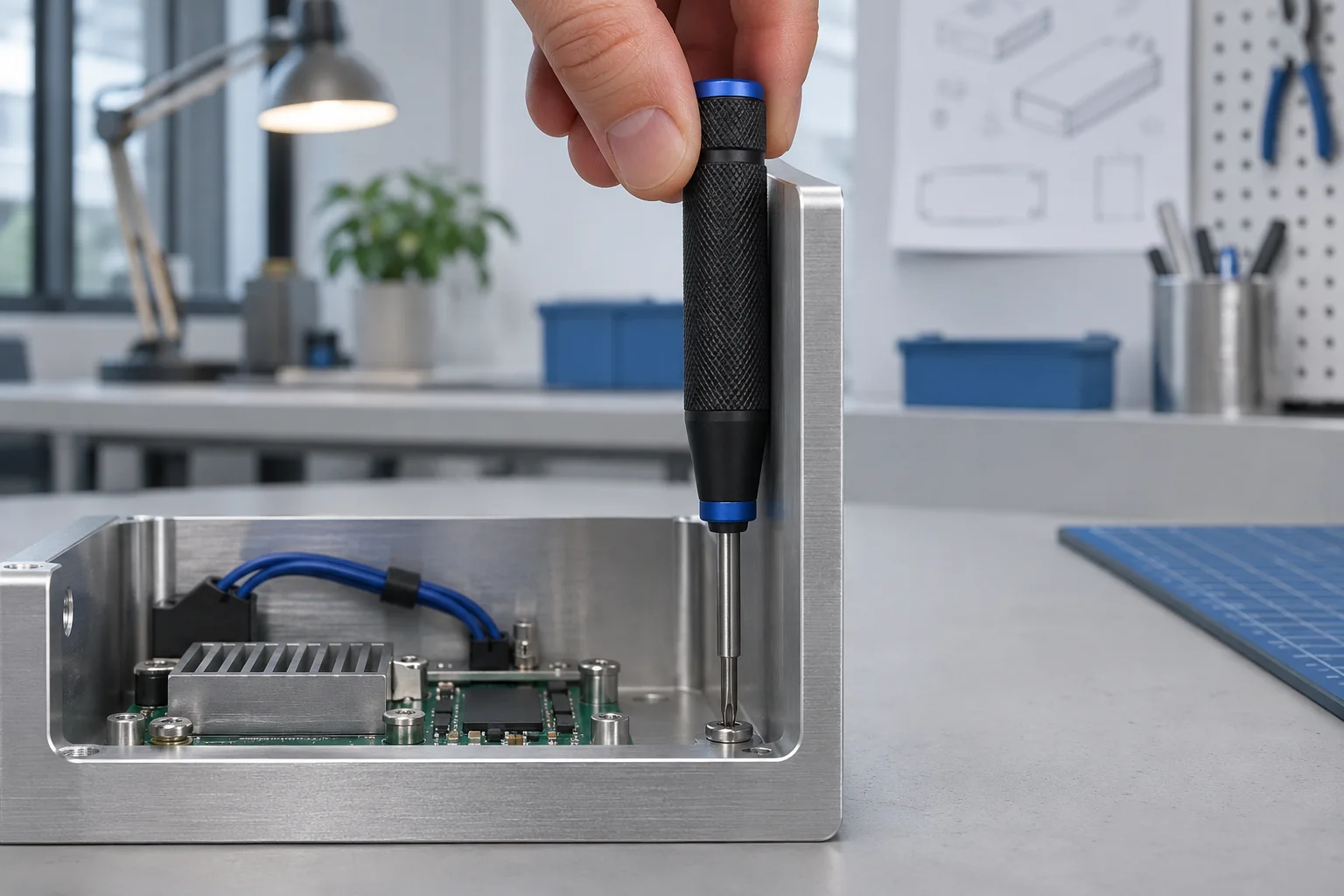
Illustrative example
Imagine a screw inside a small enclosure. Its head is visible in the model, but a neighbouring wall could prevent a screwdriver handle from reaching the screw along its required axis. Before changing geometry, document the tool assumption and check alternative assembly sequences with the team. This example is hypothetical; it is not a claim about a client product.
What this checklist cannot confirm
CAD access checks are a starting point. Tool tolerances, torque requirements, production fixtures, ergonomics and physical testing depend on the actual product and process. A checklist is not a manufacturing approval.
Sources: Protolabs: sheet metal enclosure design; Protolabs: assembly considerations.